
A framework that captures the essence of human interaction brilliantly is the Johari Awareness Model, better known as the Johari Window.
Developed in 1955, and named after the two authors of the model, Joseph Luft and Harry Ingham, it is a ‘graphic model of interpersonal behaviour’ (Luft, 1969:5). While there is much literature available referencing the model, some is not appropriately attributed or interpreted, therefore the writing in this article is informed by the Johari Window co-author’s Joseph Luft’s books ‘On Human Interaction’ (Luft, 1969) and ‘Group Processes’ (Luft, 1984) to maintain the integrity of the model.
The model features four quadrants representing what is known to yourself and/or to others: open, hidden, blind and unknown relating to beliefs, emotions, thoughts, and behaviours (Luft, 1969) as shown in Figure 1.
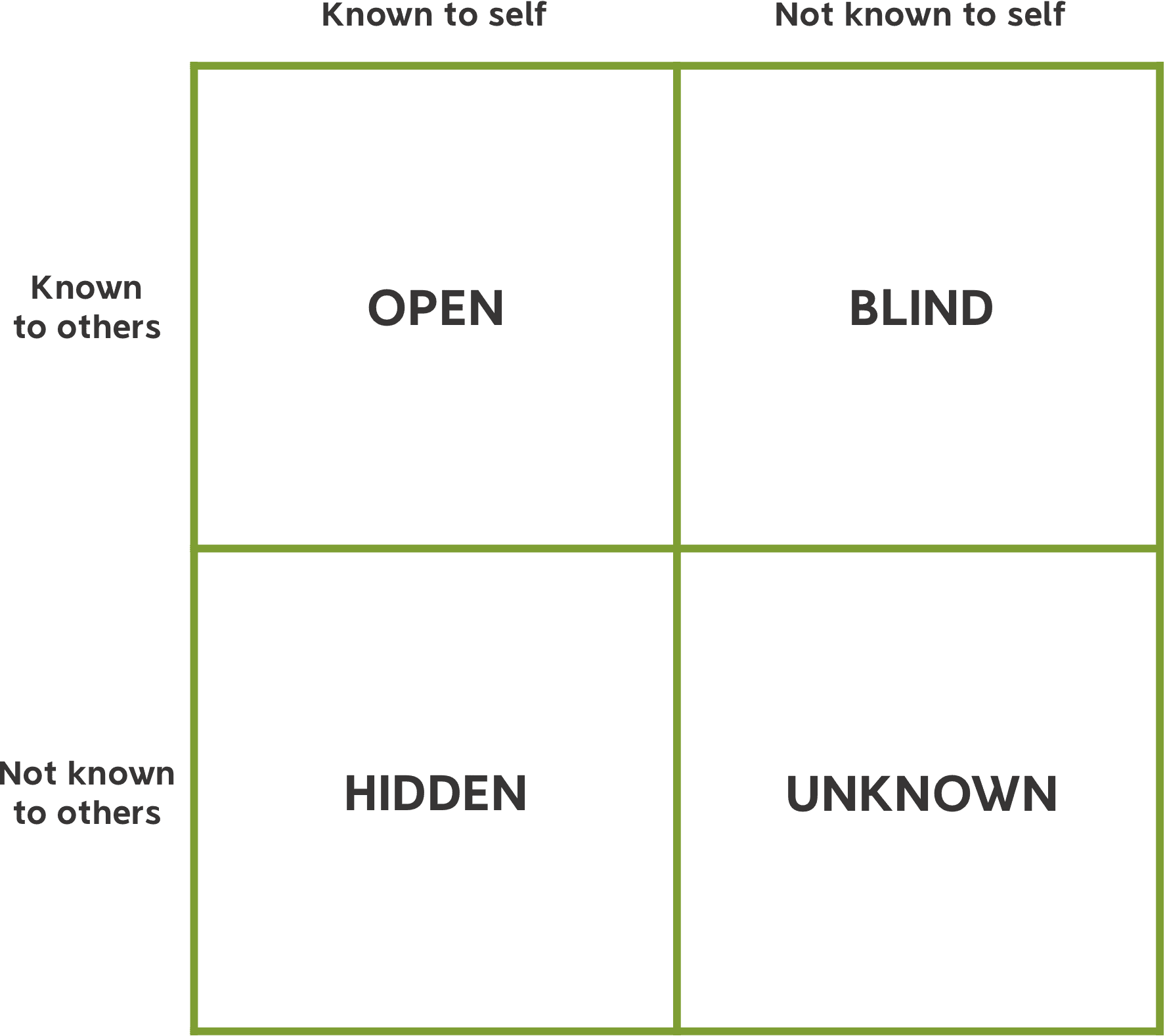
Figure 1. Johari Awareness Model/Johari Window (Luft, 1969).
While the quadrants of the Johari Window are typically shown as four equal sized squares for simplicity, in reality they vary in size, both individually and in relation to each other as illustrated in Figure 2, and their size is in constant flux (Luft, 1969). ‘A change in any one quadrant will affect all other quadrants’ (Luft, 1969:14). For example, when disclosure happens, information moves from the hidden or blind quadrants (shrinking them) into the open quadrant (enlarging it).
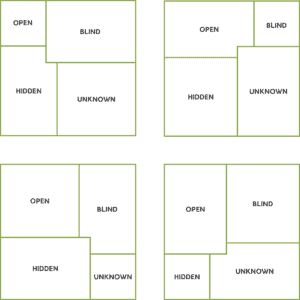
Figure 2. Examples of varying quadrant sizes of Johari Awareness Model/Johari Window (Luft, 1969).
Open Quadrant
What is in the open quadrant is known to yourself and others. You are aware of your beliefs, emotions, thoughts and behaviours that rest in this quadrant, and you are willing to freely share them with others around you (Luft, 1969). Luft distinguishes between forced disclosure, which he describes as ‘neither useful or desirable’ (Luft, 1969:18) and desirable self-disclosure which ‘takes work and some boldness because openness may be confused with nakedness’ (ibid).
Luft highlights that one of the qualities that can be found in the open quadrant is the ‘tolerance for anxiety in self’ (Luft, 1969:22).
Hidden Quadrant
The hidden quadrant is known to yourself, but not to others. Your beliefs, emotions, thoughts and behaviours are kept undisclosed from others (Luft, 1969) in this quadrant. This may include what is not relevant to the interaction or the relationship, what is too painful or feels inappropriate to disclose, or what you want to keep secret (ibid).
When information travels from the hidden to the open quadrant, disclosure happens. When the disclosure is voluntary, it can be beneficial to an interaction or relationship, however when the disclosure is involuntary, it can lead to judgement of yourself and others (Luft, 1984).
Blind Quadrant
The blind quadrant is known to others, but not to yourself. Described also as ‘psychological blindness’ (Luft, 1984:65), what is in the blind quadrant requires external feedback (Luft, 1969). Awareness that blind spots exist is helpful, and knowing that every person has blind spots is also comforting, but ultimately uncovering what is in the blind quadrant is important to your relationship with yourself and others (ibid). Equally important is acceptance that regardless of your awareness level, some degree of blindness will persist throughout your lifetime; never being completely free of blind spots is being human (ibid).
Disclosure of blind spots can occur in many different ways including experiences, education, and feedback from others (Luft, 1969). Discernment of feedback is particularly sensitive in this quadrant as the knowledge lies with others, not yourself. Forced feedback, referred to by Luft as ‘psychological rape’ (Luft, 1969:35) can lead to a loss of trust in a relationship as well as emotional turmoil and increased anxiety in the person receiving the feedback (Luft, 1969).
However, when feedback is shared with consent, it can create a more open and vulnerable relationship and can result in increased trust and personal growth (Luft, 1969). Especially when you feel anxious, this consent is critically important as you need to feel safe to be open to receiving the feedback (ibid), otherwise you may misinterpret it through a lens of perceived threat, or you may shut down to receiving any feedback at all.
Unknown Quadrant
What is in the unknown quadrant is neither known to yourself nor others. Equally unknown is the size of this quadrant, but as illustrated in Figure 3, it is suggested to be larger than the other quadrants (Luft, 1969).

Figure 3. Illustration of unknown size of the unknown quadrant of the Johari Awareness Model/Johari Window (Luft, 1969).
Confirmation of what exists in this quadrant can only occur after something moves into one of the other quadrants that exist in the realm of your consciousness (Luft, 1969). Shining a light on the deep unknown can occur through creating altered inner states, deliberately or inadvertently (ibid).
Luft highlights that the unknown quadrant contains both ‘the residue of past experience’ and ‘the untapped resources of the person’ (Luft, 1969:66). In the context of anxiety, he writes that ‘anxiety warns the individual not to risk the new for fear of re-arousing the old hurt’ (Luft, 1969:67).
Each quadrant holds its own unique characteristics, and you have a choice how you choose to interact with them, in interaction with yourself, and in interaction with others.
Further Model Dynamics
Interactions occur not only while you interact, but are also anticipatory and retrospective when another person is not present (Luft, 1984).
Understanding that you interact through the lens of your own quadrants, and each person you interact with interacts through the lens of their own quadrants, it is important to recognize your and their quadrants are not always equally matched in interactions. For example, you may operate out of your open quadrant, while a person you interact with is focused on their own hidden quadrant (Luft, 1984).
All these model dynamics unfold in real-time in every interaction you have, and understanding the Johari Window gives you a powerful yet simple tool for both navigating these interactions as well as greater awareness of your own quadrants, and how you interact with them internally and externally.
References
Luft, J. (1969). On Human Interaction. Palo Alto, CA: National Press Books.
Luft, J. (1984). Group Processes: An Introduction to Group Dynamics. 3rd edn. Palo Alto, CA: Mayfield Publishing Company.